

From Biotechnology, Semiconductors, Logistics, and Robotics to Future Mobility and Marine Industries… Emerging as a Regional Innovation Hub Connected by Carbon Neutrality
- NO
- 432885
- Date
- 2026-11-09
- modification day
- 2026-11-09
- Writer
- 미디어커뮤니케이션학과 (032-835-8590)
- Count
- 1189
Strengthening Incheon's Biotechnology Talent Pipeline Through K-Bio BootCamp and Overseas Korean Youth Programs Demonstrating Excellence in Practical AI and Robotics Education Through a First-Place Finish at RoboCup and AI Hackathons Expanding Regional Innovation Based on Marine and Island Resources Through the Incheon International Ocean Forum and Treasure Islands 168 Project
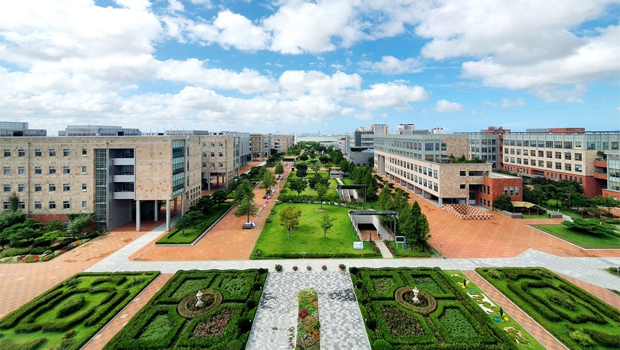
Panoramic view of Incheon National University
Incheon National University's (INU) ANCHOR (RISE) Project Group is expanding its role as a leading regional university by connecting Incheon's strategic industries and regional challenges across biotechnology, artificial intelligence (AI), robotics, carbon neutrality, and marine and island resources.
Led by President Injae Lee, INU's ANCHOR Project is based on three core visions: becoming an "Innovative Education University," a "Research-Oriented University," and a "Leading Regional University." The project focuses on connecting the University's educational and research capabilities with regional development.
Through educational, technological, and cultural innovation, the initiative aims to drive regional transformation and expand Incheon's industrial and geographical strengths into domestic and international industry-academia-research networks, promoting shared growth between the University and the region.
At the heart of this approach is the integration of talent development, industry-academia cooperation, regional problem-solving, and global collaboration into a unified framework rather than operating individual initiatives as isolated programs.
The K-Bio BootCamp and Overseas Korean Youth K-Bio Experience Camp serve as major pillars of biotechnology talent development. Meanwhile, INU's first-place finish at RoboCup, AI hackathons, and public data living labs demonstrate the effectiveness of practice-oriented education in AI and robotics.
The International Eco-Friendly Plastics Conference and the establishment of an Asia-Pacific bioplastics cooperation framework are also expanding the foundation for carbon-neutral industrial transformation and international collaboration.
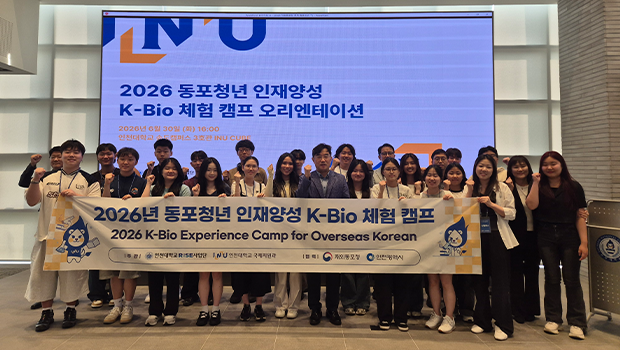
K-Bio Experience Camp for Young Overseas Koreans
K-Bio BootCamp: Developing Biotechnology Talent Beyond University Boundaries INU's ANCHOR Project Group introduced a supra-regional biotechnology talent development model through "K-Bio BootCamp@Incheon 2026," which brought together students from five national universities across Incheon, Gangwon, Gwangju, and Jeonnam.
The program involved 40 students majoring in pharmacy and life sciences from Incheon National University, Gangwon LRS Shared University, Chonnam National University, Mokpo National University, and Sunchon National University.
The 80-hour curriculum consisted of special lectures, laboratory experiments and practical training, visits to companies and institutions, and team projects.
Participants received hands-on training at the Incheon Bioprocess Training Center and the SNU Pharmaceutical and Bio Training Center in Siheung, Gyeonggi Province. They also visited companies and organizations including Celltrion, Daebong LS, HLB BioStep, and Incheon Startup Park.
A key feature of the program was its emphasis on developing a comprehensive understanding of biotechnology production environments beyond basic laboratory exercises.
At the Incheon Bioprocess Training Center, students experienced production process layouts and operational workflows using actual manufacturing facilities. At the SNU Pharmaceutical and Bio Training Center, they learned analytical techniques required for biopharmaceutical production and quality control, as well as the practical application of Good Manufacturing Practice (GMP) standards.
The program concluded with team project presentations in which eight teams proposed strategies covering product development, commercialization, and investment attraction in biotechnology drug development and entrepreneurship.
The initiative was also significant because the participating universities voluntarily collaborated in planning and operating the program without relying on a separate supra-regional government project.
Building on these achievements, INU plans to expand the number of participating universities and consider transitioning the program into a regular credit-bearing summer or winter session.
Another major component of biotechnology talent development is the K-Bio Experience Camp for young overseas Koreans.
INU's ANCHOR Project Group, in cooperation with the Overseas Koreans Agency and Incheon Metropolitan City, launched the "K-Bio Experience Camp for Young Overseas Korean Talent" to help young overseas Koreans experience Incheon's biotechnology industry and explore opportunities for education, employment, and settlement in Korea.
Participants completed theoretical and practical training in life sciences, including biopharmaceuticals, materials for anticancer drug development, and genetic diagnostics. They also toured research and development facilities and manufacturing sites operated by companies in the Songdo Bio Cluster, including Dong-A ST, Cytiva Korea, and Voronoi.
The program represents a collaborative model in which universities, government agencies, and local authorities work together to attract talented young overseas Koreans and help them develop into professionals in the region's key industries.
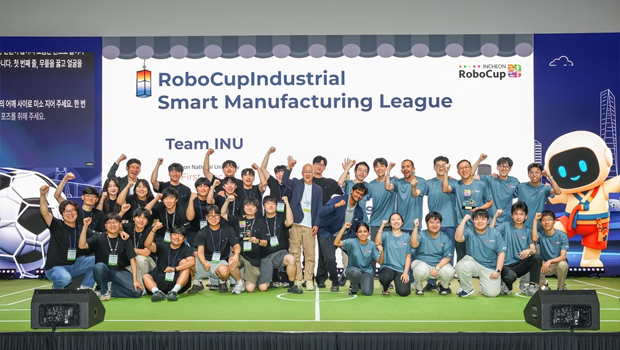
INU's TEAM INU wins first place worldwide in the Smart Manufacturing League at RoboCup 2026.
First Place at RoboCup: Demonstrating Excellence in Practice-Oriented AI and Robotics Education INU's student team, TEAM INU, won first place worldwide in the Smart Manufacturing League (SML) at "RoboCup 2026 Incheon," held at Songdo Convensia, despite competing in the event for the first time.
The team earned a final score of 210 points, finishing 73 points ahead of the second-place team from Singapore.
The SML is a highly challenging industrial automation competition in which mobile robots perform complex tasks, including object recognition, autonomous navigation, precision manipulation, assembly, and loading, in environments designed to resemble actual industrial settings.
TEAM INU was formed as an interdisciplinary team comprising students from the Department of Bio-Robotics Systems Engineering, the Department of Electrical Engineering, and the Department of Embedded Systems Engineering.
The decisive factor behind the team's victory was its independently designed "Sliding Multi-Loading System."
The system sequentially loads multiple blocks onto a sliding structure before transporting and assembling them together in a single stable operation, significantly improving operational efficiency and task completion during the competition.
The achievement demonstrated INU's ability to cultivate practice-oriented professionals capable of designing, implementing, and validating industrial robotic systems at a world-class level.
INU plans to further develop the autonomous navigation, computer vision, control, and system integration technologies demonstrated at RoboCup into core Physical AI capabilities.
These technologies will be applied to AI factories in manufacturing environments and AI-powered robotic automation in airports, ports, and logistics operations.
The University also intends to establish an integrated practical education system combining industry-demand-driven curricula, industry-academia projects, joint research with regional robotics companies, field training, internships, and employment opportunities.
Education focused on applying AI technologies to regional challenges is also expanding.
At the "Supra-Regional AI Hackathon for Solving Regional Challenges," co-hosted with the University of Ulsan, 40 students from the two universities formed mixed teams to analyze challenges facing both regions and propose AI-based solutions.
The teams developed ideas addressing real regional issues, including transportation and public transit improvements, safety management for smart cities and airport and port infrastructure, and gaps in community care and public safety.
The "Generative AI-Based Public Data Living Lab Idea Competition," organized in cooperation with JEI University, provided another example of industry-academia collaboration focused on regional problem-solving.
Participants combined public data with generative AI technologies to analyze challenges facing local small businesses and commercial districts, proposing measures to improve business conditions, revitalize commercial areas, and connect solutions with public policies.
Through these programs, INU is strengthening students' AI capabilities while expanding practical cooperation models involving universities, businesses, and public institutions.
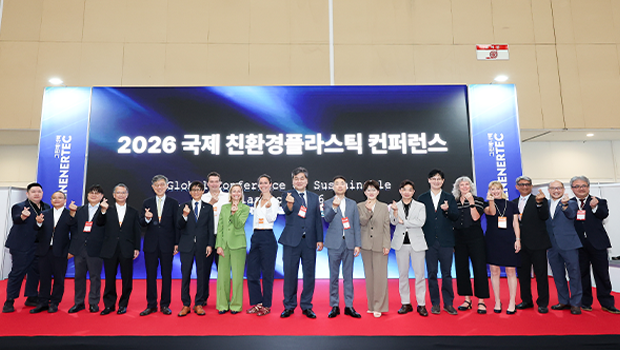
2026 International Eco-Friendly Plastics Conference
Eco-Friendly Plastics and Carbon Neutrality Cooperation: Building a Global Industrial Network International cooperation in carbon neutrality and environmentally friendly materials is gaining momentum.
The "2026 International Eco-Friendly Plastics Conference," hosted by Incheon Metropolitan City and jointly organized by INU's ANCHOR Project Group and the Incheon Tourism Organization, concluded successfully at Songdo Convensia.
As Korea's only international event dedicated specifically to environmentally friendly plastics, the conference was held in conjunction with "Green EnerTEC 2026," a specialized exhibition for the environmental and renewable energy industries.
The conference brought together representatives of bioplastics associations from eight countries, including European countries, China, Japan, Australia, India, Indonesia, and Thailand, as well as domestic and international companies and specialized organizations.
Participants discussed trends in biodegradable plastics, national regulatory frameworks, certification systems, raw material and product technology development, and commercialization cases, strengthening the foundation for industrial cooperation.
A regulatory sandbox field demonstration was also conducted in connection with the conference.
Under the demonstration, disposable items used at the conference and exhibition venues, including PLA ice cups and straws, were replaced with biodegradable alternatives. After use, these products were collected separately and processed at an integrated biogasification facility.
Based on the demonstration results, INU plans to evaluate the feasibility of processing waste biodegradable plastics and use the findings as baseline data for regulatory improvements and the development of commercialization models.
The exhibition also featured an integrated carbon neutrality pavilion operated by INU's ANCHOR Project Group.
Through a joint promotional booth for the "Incheon Carbon Neutrality Business Innovation Council (I-Zero)," consultations and information sessions were provided to support greenhouse gas reductions and carbon-neutral transitions among regional small and medium-sized enterprises.
INU's ANCHOR Project Group plans to further develop I-Zero into an "Incheon-Style Carbon Neutrality Support Platform for SMEs," integrating assessment, education, technological improvements, and commercialization support.
Cooperation in the Asia-Pacific bioplastics sector has also continued.
INU's ANCHOR Project Group convened the "2026 Asia-Pacific Bioplastics Council" and initiated the establishment of a trans-Pacific bioplastics cooperation framework to jointly respond to global environmental regulations.
Representatives of bioplastics associations and certification organizations from eight overseas countries and regions agreed to cooperate in sharing national policy and certification information, responding jointly to international environmental regulations, identifying collaborative projects, and promoting market expansion and industrial development.
INU plans to host a global eco-friendly plastics conference in Incheon in 2027 and consider establishing a shared data repository through which member organizations can exchange information on policies, regulations, certifications, and industrial trends.
Through these efforts, the University aims to position Incheon as a regional hub for bioplastics policy, technology, and certification cooperation in the Asia-Pacific region.
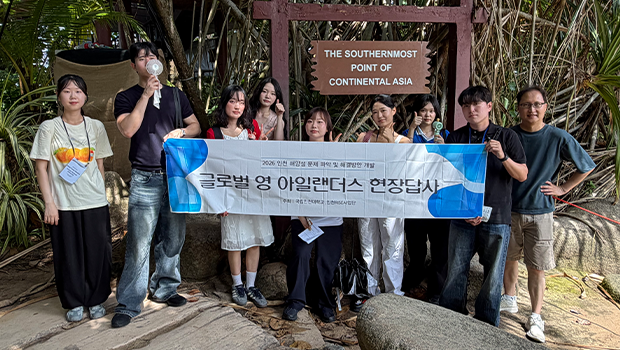
Global Young Islanders field study
Expanding Marine and Logistics Innovation Through the Incheon International Ocean Forum INU and its ANCHOR (RISE) Project Group are expanding their role as a university leading the future of the regional maritime industry by showcasing achievements in marine and logistics education, research, and industry-academia cooperation at the 7th Incheon International Ocean Forum, held in Songdo, Incheon.
Under the overarching theme "The Future of the Ocean in the AI Era," this year's forum will discuss major challenges and future development directions in maritime industries, including shipping and logistics, smart ports, marine tourism, marine environment and energy, and AI-based maritime cities.
President Injae Lee will participate as Chair of the Forum Committee, while a faculty member involved in INU's ANCHOR Project will serve as session chair for "Global Network Optimization."
Based on Incheon's geographical and industrial characteristics, INU's ANCHOR Project Group has implemented subprojects in logistics, islands, and marine industries, promoting the development of specialized professionals and an ecosystem for cooperation among local government, industry, and academia.
The project group has continued to strengthen its educational and research foundations through logistics talent development in response to changes in global supply chains, the expansion of domestic and international industry-academia-research networks, and efforts to address regional challenges using island and marine resources.
Recently, the University established the Institute of Marine and Fisheries Industry Research and hosted a symposium involving experts and representatives from industry, academia, research institutions, and government agencies, consolidating its capabilities in the maritime sector.
These efforts are expanding the foundation for supporting the development of Incheon's marine and fisheries industries by connecting education, research, and industry-academia cooperation across fields such as the marine environment, shipping, and logistics.
Robots developed by INU's TEAM INU, which won first place worldwide in the Smart Manufacturing League at RoboCup 2026 Incheon, will also be exhibited at the forum.
The autonomous navigation, vision, control, and system integration technologies demonstrated at RoboCup will be further developed into core Physical AI capabilities and applied to AI-powered robotic automation in airports, ports, and logistics operations, extending beyond manufacturing environments.
Kim Gyu-won, Director of INU's ANCHOR (RISE) Project Group, stated, "Incheon National University has been developing talent and advancing research and industry-academia cooperation in logistics and marine and island-related fields, while recently achieving meaningful results in AI and robotics as well."
He added, "As we are establishing an advanced marine robotics demonstration system through the Marine Robotics Demonstration Center within the Institute of Marine and Fisheries Industry Research, including technologies for oil spill monitoring and marine debris detection, we expect synergies between the maritime industry and advanced robotics technologies to accelerate."
Incheon Treasure Islands 168: Discovering the Value of Islands Together with Citizens and Young People INU's ANCHOR Project Group is implementing the "Incheon Treasure Islands 168" project to highlight the value of Incheon's 168 islands and explore sustainable approaches to island development in collaboration with local residents and young people.
INU hosted the "Incheon Marine and Island Awareness Improvement and Treasure Islands 168 Competitiveness Enhancement Project Performance Sharing Conference," where participants reviewed first-year achievements and discussed future directions.
Through citizen participation programs, project presentations, and special lectures, the event highlighted the environmental and cultural value of Incheon's islands and coastal areas while demonstrating the potential of a regional innovation platform involving both the University and the local community.
Youth participation programs are also continuing.
The "Global Young Islanders" exploration group visited major islands in Singapore to benchmark strategies for ecological conservation, environmentally friendly marine leisure activities, and storytelling-based destination branding.
At the "Island-to-Island Project in Yeosu," which involved approximately 60 students from nine universities nationwide, INU students received awards for proposing solutions to regional challenges, including island tourism, the utilization of marine waste plastics, and the revitalization of closed schools.
The project group has also operated community-oriented programs directly serving residents of island areas.
INU's Department of Beauty Industry conducted the "Island Beauty Healing Care" program on Daeijakdo, Seungbongdo, and Jawoldo islands, providing beauty and wellness services such as sun care, skincare education, and personal color analysis.
INU plans to continue cooperating with regional partner organizations and private groups to promote island culture, improve living conditions, and increase the number of people visiting and staying in island communities.
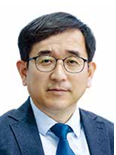
Kim Gyu-won, Director of INU's ANCHOR Project Group
Message from Director Kim Gyu-won: "Fulfilling Our Responsibilities as a National University by Serving as Incheon's Mirror and Guiding Light" "INU's ANCHOR (RISE) Project Group is creating an innovation ecosystem in which talented individuals, businesses, and local communities grow together by connecting the University's educational and research capabilities with regional development.
Our mission is to address regional challenges alongside local communities, cultivate the talent needed by industry, and ensure that these achievements lead to meaningful improvements in citizens' lives and the regional economy.
Based on Incheon's strategic industries and regional needs, we have pursued practice-oriented education, industry-academia cooperation, regional problem-solving, and global collaboration in an integrated manner.
We are expanding opportunities for practical cooperation among diverse stakeholders by sharing educational resources and industrial infrastructure beyond the boundaries between universities and local communities.
As a result, we have accumulated achievements in developing industry-ready professionals and strengthening industry-academia cooperation in regional strategic industries, including biotechnology, robotics, and AI.
Through interdisciplinary education and practical projects, students are developing capabilities that translate directly into competitiveness in industrial settings.
Building on these strengths, INU was recently selected as a participating university in the Manufacturing AX + AI Robotics Consortium under the Ministry of Education's 'Supra-Regional Growth Engine Talent Development Project,' recognizing our capabilities in AI and robotics education and industry-academia cooperation.
Leveraging Incheon's geographical advantages as a city with both an international airport and a major seaport, we are collaborating with robotics and logistics companies and public institutions to establish an Incheon-style logistics AI transformation (AX) talent development model.
This model connects education, corporate projects, field demonstrations, employment and entrepreneurship, and technology commercialization.
Over the next four years, we will expand joint courses, industry-academia capstone projects, and field training to cultivate practice-oriented professionals.
We aim to develop interdisciplinary talent equipped with expertise in smart logistics and port automation, thereby contributing to Incheon Metropolitan City's industrial innovation strategy centered on logistics AI and Physical AI.
Addressing challenges together with local communities is another important responsibility of our project group.
Through collaboration with other universities, students have gained experience analyzing real regional challenges and proposing solutions, helping them develop a deeper understanding of their communities and the ability to take practical action.
We will continue follow-up cooperation to ensure that the proposed ideas can be effectively applied in real-world settings.
Going forward, INU's ANCHOR Project Group will build a cooperative system based on partnerships among local governments, industry, academia, research institutions, and public agencies, creating a virtuous cycle of talent development, industrial innovation, and community contribution.
We will work responsibly to ensure that education leads to employment and settlement, research strengthens business competitiveness, and cooperation improves the quality of life for citizens.
We ask for your continued interest and participation as we work together to shape Incheon's future."
*Related Article: Jung Su-jung, "[Visiting Leading ANCHOR Universities / Incheon National University] From Biotechnology, Semiconductors, Logistics, and Robotics to Future Mobility and Marine Industries... Emerging as a Regional Innovation Hub Connected by Carbon Neutrality," University News Network (UNN)*, October 8, 2026. https://news.unn.net/news/articleView.html?idxno=598344
- Attachment
- There are no attachments.