

College of Urban Sciences
The College of Urban Sciences consists of the Department of Urban Administration, the Department of Urban Engineering, the School of Urban and Environmental Engineering (majors in Civil and Environmental Engineering and Environmental Engineering), and the School of Urban Architecture (majors in Architectural Engineering and Urban Architecture).
-
TEL 032-835-8802~3
-
FAX 032-835-0728
-
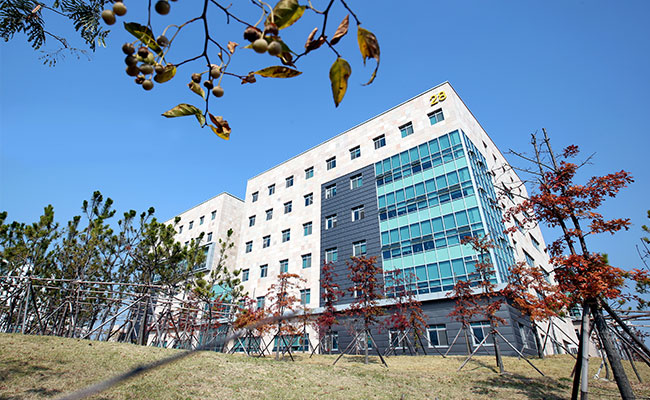
LOCATION Room 407, Building 28, College of Urban Sciences
Introduction
The College of Urban Sciences was separated from the College of Engineering in the 2010 academic year and consists of the Department of Urban Administration, the School of Urban and Environmental Engineering (majors in Civil and Environmental Engineering and Environmental Engineering), the Department of Urban Engineering, and the School of Urban Architecture (majors in Architectural Engineering and Urban Architecture). It conducts convergent education and research in practical disciplines aimed at providing realistic solutions to the diverse and complex phenomena of cities. To meet the demands of the times for a sustainable, future-oriented city characterized by human-centeredness, low-carbon green growth, the convergence of cutting-edge techniques, high-quality design, and the establishment of ubiquitous urban systems, the college seeks to create new urban value by creatively and innovatively solving current urban problems and leading the paradigms required by future society.
History
-
2025.07
- Dean Kim Eung-cheol Takes Office
-
2023.07
- Dean Park Ji-hoon Takes Office
-
2017.09
- Dean Park Ju-mun takes office
-
2016.07
- Dean Park Chang-hwa Takes Office
-
2016.03
- The Major in Urban and Civil Engineering within the School of Urban and Environmental Engineering was separated and reorganized into the Department of Urban Engineering.
-
2016.03
- The Architecture and Urban Design majors have been integrated into the Urban Architecture major.
-
2014.07
- Dean Shin Eun-cheol Takes Office
-
2010.03
- Establishment of the College of Urban Sciences by Division: Department of Urban Administration, School of Urban and Environmental Engineering, School of Urban Architecture
-
2008.09
- Change of Recruitment Unit Name: Department of Civil and Environmental Systems Engineering → Department of Civil and Environmental Engineering
-
2002.10.15
- Recruitment Unit Quota Adjustment: Department of Civil and Environmental Systems Engineering 60 students, Department of Architectural Engineering 40 students
-
2001.03
- Change of Recruitment Unit Name: Department of Civil Engineering → Department of Civil and Environmental Systems Engineering
-
1977.01.10
- Approval for Establishment of Incheon Institute of Technology (2 Departments): Department of Civil Engineering 80 students, Department of Architectural Engineering 40 students, Department of Civil Engineering 80 students, Department of Architectural Engineering 40 students
Educational Objectives and Goals
As a sanctuary of new learning where engineering and humanities and social sciences converge to utilize global trends and characteristics of urban development, lead the Northeast Asian international city envisioned by the Incheon community, and build a future-oriented high-tech city based on world-class eco-friendly green growth, the ultimate educational goal is to cultivate the following three types of urban residents.
- 1Cultivating Creative and Innovative Urban Experts:
Fostering urban experts capable of creatively tackling and innovatively solving various urban problems arising in rapidly changing cities by understanding and applying new academic theories and practices fused with traditional disciplines. - 2Fostering comprehensive and systematic urban managers
capable of performing diverse duties to address complex and varied modern urban problems arising across various sectors of society by pursuing a diverse academic understanding that centers on and encompasses the city. - 3Cultivating Pioneering and Service-Oriented Urban Leaders: Fostering
exemplary and leading urban leaders who actively participate in discussions on local issues, serve the community, and take the lead in solving community problems by strengthening practical training capabilities that integrate the theory and practice of their major fields with the local community.