Redesigning Complex Genetic Information in a Single Step — Microbe-Based Next-Generation Bioprocesses Enabled by iTARGET Technology
- 글번호
- 416663
- 작성일
- 2025-12-19
- 수정일
- 2025-12-19
- 작성자
- 홍보과 (032-835-9490)
- 조회수
- 93

iTARGET Research Team
A joint research team from Incheon National University, POSTECH, Seoul National University, and UNIST has developed iTARGET, an integrated microbial strain optimization platform poised to drive the transition to environmentally friendly industries.
The newly developed technology experimentally elucidates the synergistic effects of complex genetic variations, demonstrating strong industrial applicability by increasing the productivity of the high–value-added natural compound naringenin by 2.8 times compared to existing methods.
As industries seek to reduce carbon emissions and ensure sustainability, there is an urgent demand for bio-based production technologies to replace petroleum-based chemical processes. A key challenge lies in developing high-performance microbial strains capable of rapidly and efficiently synthesizing useful compounds from renewable resources. However, the complex metabolic networks and gene–gene interactions within microbial genomes have limited the predictability and effectiveness of traditional approaches based on rational design or single-gene mutations.
To overcome these limitations, the research team established iTARGET, a unified workflow that integrates transposon-based mutagenesis, biosensor-coupled screening, and MAGE-based multiplex genome editing. Using this system, the team rapidly identified nine candidate genes contributing to enhanced productivity in Escherichia coli and conducted large-scale combinatorial exploration to experimentally determine optimal combinations of genetic variants. In particular, the biosensor-based screening enabled faster and more precise identification of high-performing mutants, playing a crucial role in securing highly efficient strains.
iTARGET is distinguished by its ability to: ▲ overcome the limitations of conventional rational design–centered approaches; ▲ experimentally verify synergistic effects arising from complex genetic variations; and ▲ enable large-scale strain screening. The team anticipates that iTARGET will become a standard platform for rapid strain development across diverse biomanufacturing fields, including eco-friendly materials, pharmaceuticals, and advanced biomaterials.
Co-corresponding author Professor Seong-ho Jang of Incheon National University stated, “This research resolves a long-standing bottleneck in metabolic engineering—high-speed, high-precision strain development—and has the potential to significantly lower industrial entry barriers for biomaterials and pharmaceutical production.”
Co-corresponding author Professor Gyu-yeol Jeong of POSTECH added, “With the platform’s potential sufficiently validated, we plan to continue follow-up studies leading to real-world industrial applications and the development of new biochemicals.”
This achievement was published online on November 6 (local time) in Trends in Biotechnology (Impact Factor 14.9; JCR 98.6%). The research was supported by the Ministry of Science and ICT, the Ministry of Oceans and Fisheries, and the National Research Foundation of Korea, and was conducted through collaboration among multiple domestic institutions, including Incheon National University, POSTECH, Seoul National University, UNIST, the World Institute of Kimchi, and Chonnam National University.
The paper is available at: https://doi.org/10.1016/j.tibtech.2025.10.009
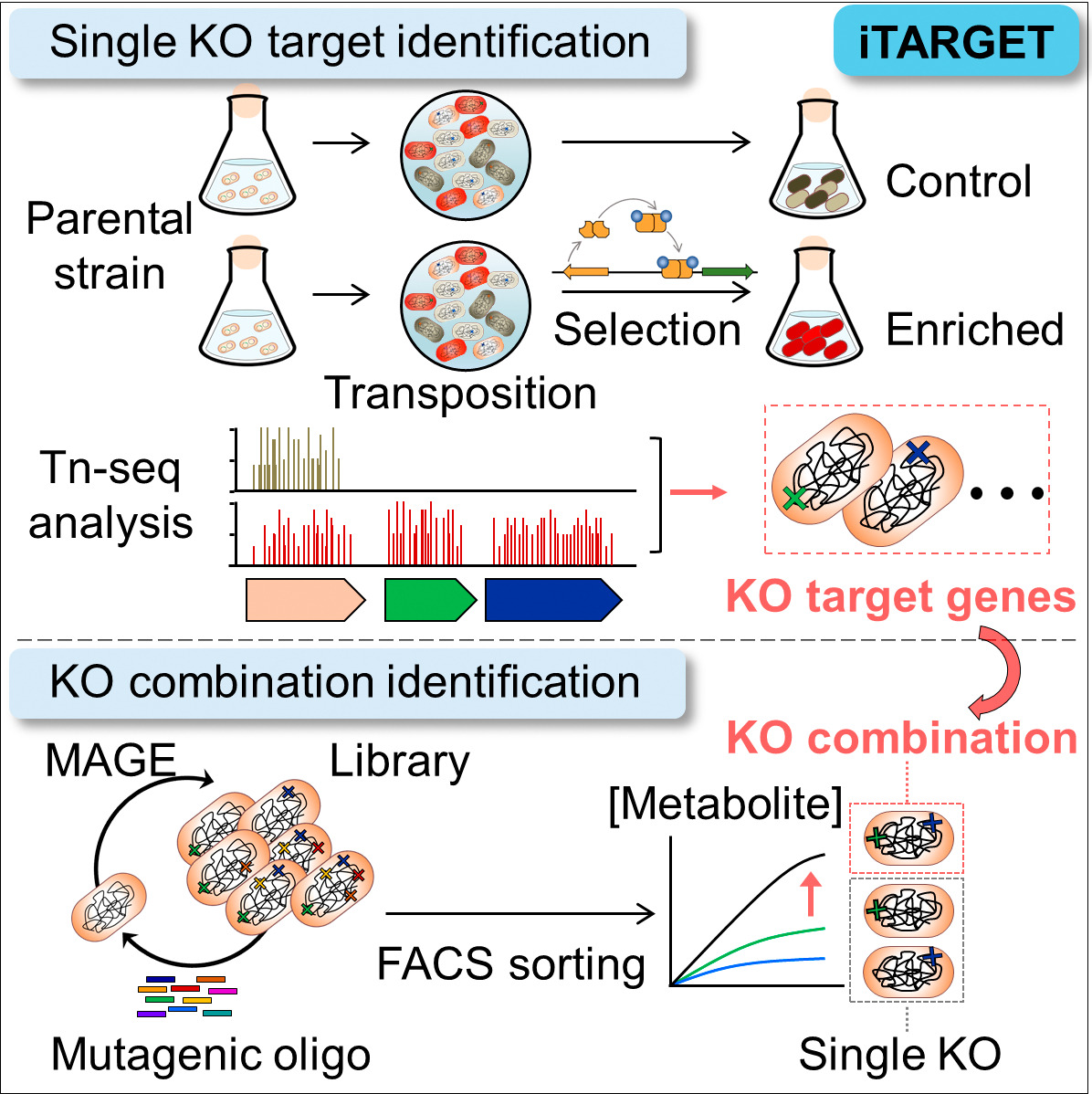
Overview of iTARGET